There’s something enchanting about the sweet scent of Zarda wafting through the kitchen, a quintessential Pakistani sweet rice dessert that never fails to evoke cherished memories. Imagine a sunlit afternoon, family gathered around the table, as vibrant grains of fragrant rice, glistening with hints of cardamom and cloves, steal the show. This dish doesn’t just satisfy a sweet tooth; it brings warmth and nostalgia, a comforting reminder of festive occasions and joyful celebrations.
Recently, I found myself craving those delightful flavors, as a busy week of fast food left my palate longing for something wholesome and homemade. Thankfully, Zarda is not only a feast for the senses but also a breeze to prepare. With its eye-catching colors and luscious taste, this gluten-free treat is perfect for impressing guests or simply treating yourself. So, take a moment to embrace the magic of homemade sweetness—your kitchen and heart will be richer for it. Ready to dive in? Let’s make magic happen with this classic Pakistani sweet rice!

Why is Pakistani Sweet Rice a must-try?
Nostalgic flavors: Each bite of Zarda brings back beautiful memories of family gatherings and celebrations.
Ease of preparation: This recipe is quick and straightforward, making it accessible for cooks of all levels.
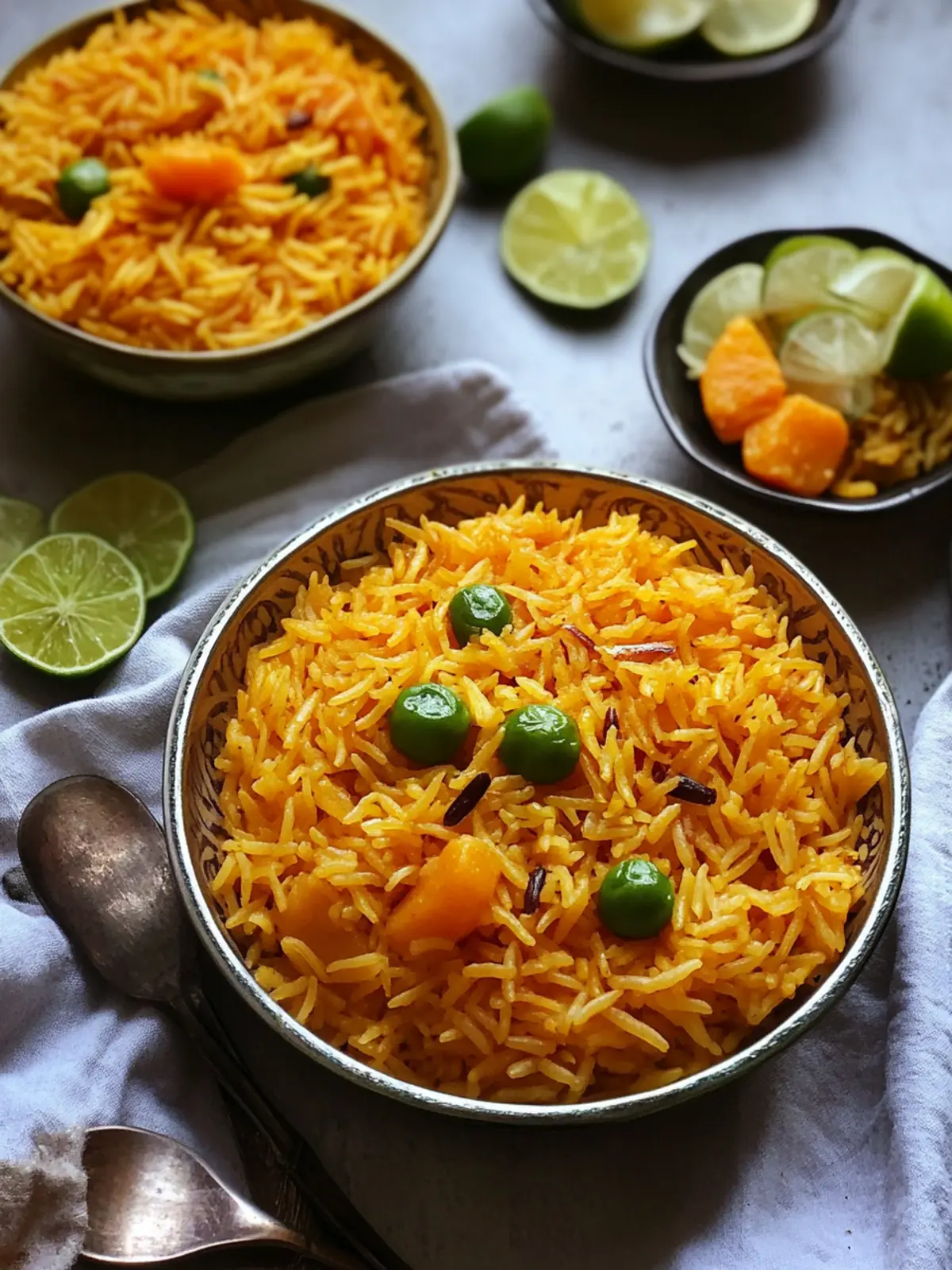
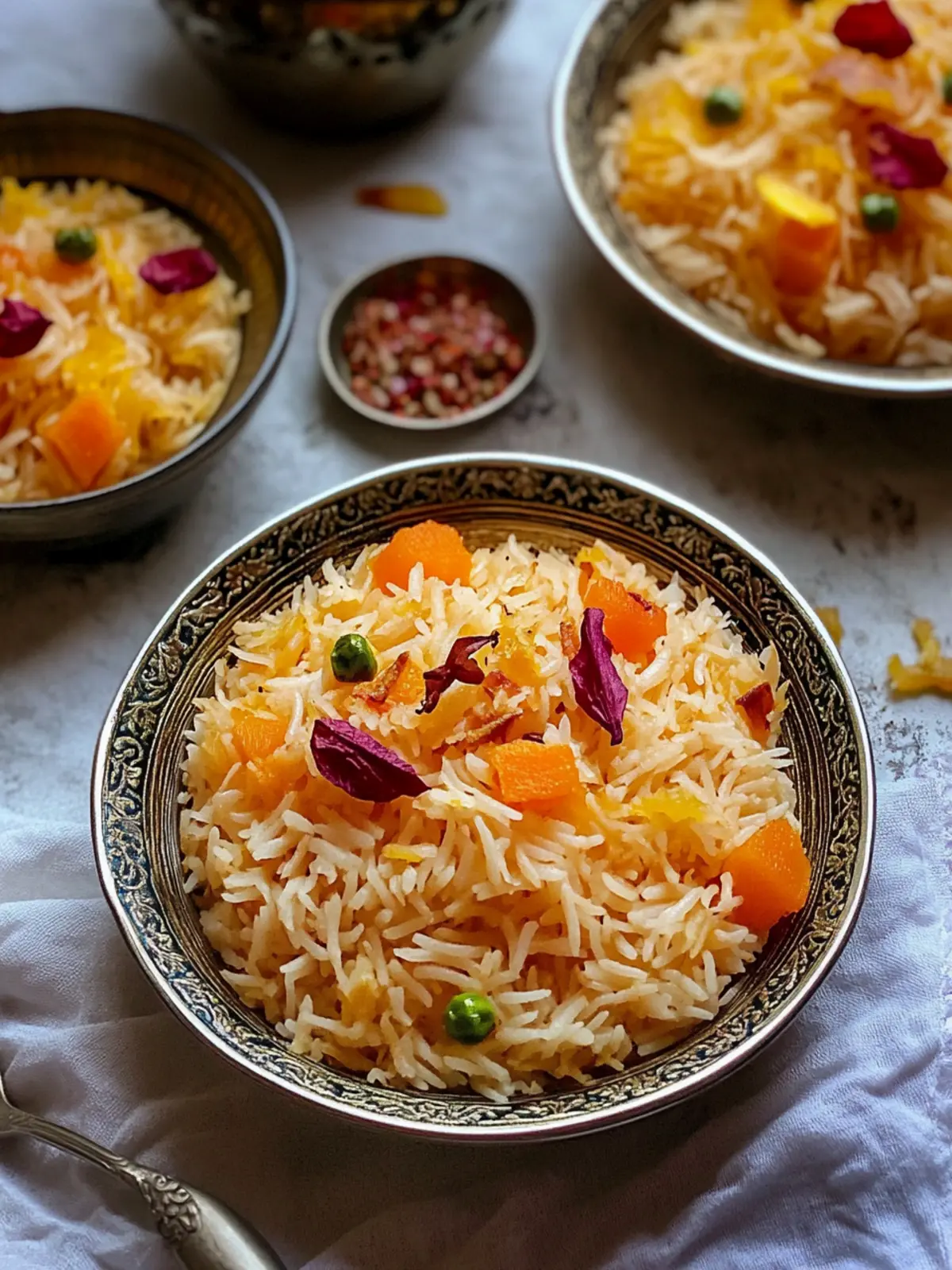
Vibrant colors: The eye-catching presentation with hints of yellow and colorful fruits makes it a stunning centerpiece.
Versatile dessert: Perfect for festivities, Zarda can also be enjoyed on any day, satisfying your sweet cravings.
Crowd-pleaser: Its delightful aroma and taste are sure to impress guests, making it a staple at celebrations.
Try serving this delicious dessert alongside other festive dishes for a complete experience!
Delicious Pakistani Sweet Rice Ingredients
For the Rice
• Parboiled Basmati Rice (Sela Rice) – This is essential for achieving the perfect texture; soak for at least 2 hours beforehand.
• Water – Acts as the cooking medium to hydrate the rice.
• Salt – Balances the sweetness of the dish.
For the Flavoring and Color
• Orange or Yellow Food Coloring – Adds a cheerful hue; use it sparingly to achieve your desired intensity.
• Clarified Butter (Ghee) or Neutral Oil – Increases richness and enhances the overall flavor profile.
• Green Cardamoms – Infuses a warm, aromatic essence into the rice.
• Cloves – Deepens flavor and provides a wonderful aromatic backdrop.
For the Sweetness and Texture
• Granulated Sugar – The primary source of sweetness; adjust to your taste for the perfect balance.
• Candied Fruit (Tutti Frutti or Ashrafiyaan) – Offers chewy texture and vibrant color, making your Pakistani sweet rice visually appealing.
• Sliced Almonds or Pistachios – Add delightful crunch and nuttiness; feel free to swap depending on your preference.
• Kewra Essence (Screwpine) – Imparts a distinct floral aroma that elevates the dish.
By gathering these ingredients, you’re well on your way to creating an unforgettable Pakistani Sweet Rice experience that will enchant your family and friends!
How to Make Pakistani Sweet Rice
-
Boil water: In a large pot, bring enough water along with salt and food coloring to a boil over medium heat. This will be the base for cooking your rice.
-
Cook the rice: Drain the soaked parboiled basmati rice and carefully add it to the boiling water. Cook until the rice is just tender; this usually takes about 6-8 minutes. Strain the rice and set it aside.
-
Infuse flavors: In the same pot, heat clarified butter or neutral oil over medium heat. Add the green cardamoms and cloves, cooking them for about 1 minute until fragrant. This step brings out their essential oils and elevates the dish’s aroma.
-
Combine ingredients: Gently add the strained rice, sugar, candied fruits, sliced almonds or pistachios, and Kewra essence into the pot. Mix everything gently to ensure even distribution without breaking the rice grains.
-
Steam the mixture: Cover the pot tightly, reduce the heat to low, and let it steam for 30 minutes. Avoid lifting the lid during this time to maintain the moisture.
-
Fluff and serve: After 30 minutes, remove the pot from heat and fluff the rice gently with a fork. It’s now ready to be served—enjoy the warmth and nostalgia of your homemade Pakistani sweet rice!
Optional: Garnish with extra sliced almonds or a sprinkle of colorful candied fruits for an eye-catching presentation.
Exact quantities are listed in the recipe card below.
Pakistani Sweet Rice Variations
Feel free to unlock your creativity with delightful twists to this classic recipe!
-
Fresh Fruits: Swap out candied fruits with seasonal fresh fruits like mango or berries for a refreshing touch. They add a bright burst of flavor!
-
Nut Diversification: Experiment with different nuts, such as walnuts, pecans, or hazelnuts, for unique textures and tastes that can elevate your dish.
-
Saffron Elegance: Add a few strands of saffron into the cooking water for an exquisite aroma and luxurious color that will charm any guest.
-
Dairy-Free Delight: Use coconut oil instead of ghee for a dairy-free version that still boasts flavor and richness—perfect for those avoiding dairy.
-
Spicy Kick: Sprinkle a pinch of crushed red pepper or chili flakes while cooking for a surprising heat that contrasts beautifully with the sweetness.
-
Coconut Flavors: Stir in shredded coconut for a tropical twist that adds both flavor and texture, transporting your taste buds to sunnier locales.
-
Chocolatey Indulgence: For an unexpected treat, mix in mini chocolate chips or a drizzle of chocolate syrup to create a fusion dessert.
-
Citrus Zing: Enhance the flavor profile by adding zested orange or lemon peel. This brightens up the taste, adding a refreshing twist to every bite.
What to Serve with Pakistani Sweet Rice?
Elevate your meal experience by pairing Zarda with these comforting accompaniments that highlight its sweet, fragrant allure.
-
Mint Raita: This cooling yogurt dip balances the sweetness with a refreshing twist, enhancing flavors and adding creaminess.
-
Spicy Chicken Korma: A rich and flavorful dish that offers a delightful contrast, making every bite a tantalizing experience of sweet and savory.
-
Naan Bread: Soft and pillowy, naan serves as the perfect vessel for scooping up rich curries while complementing the sweet rice.
-
Chickpea Salad: This light and tangy salad brings a burst of freshness, balancing the sweetness of Zarda with its crunch and varied textures.
-
Fresh Fruit Chaat: A colorful mix of seasonal fruits tossed with spices offers a refreshing palate cleanser after the rich dessert.
-
Masala Tea: The aromatic spices in masala tea offer a delightful warm contrast, perfect for enjoying alongside this classic dessert.
-
Custard: Creamy and smooth, a light vanilla custard can complement Zarda’s sweetness, creating a comforting dessert duo.
Embrace these pairings to make your meal not just satisfying but an extraordinary celebration of flavors!
Make Ahead Options
Zarda, the delightful Pakistani sweet rice, is perfect for meal prep lovers! You can prepare the rice and infuse it with flavors up to 24 hours in advance. Begin by cooking the rice as per the instructions, allowing it to cool completely before transferring it to an airtight container. Store the cooked rice in the refrigerator, ensuring it’s well-sealed to prevent drying out. When you’re ready to serve, simply reheat the mixture gently on the stove with a splash of water to achieve that fluffy texture again and let it steam for a few minutes. This way, you can enjoy restaurant-quality Pakistani sweet rice with ease, perfect for busy weeknights or festive gatherings!
How to Store and Freeze Pakistani Sweet Rice
- Fridge: Store leftover Pakistani sweet rice in an airtight container for up to 3 days to maintain its freshness and flavor.
- Freezer: If you want to keep it longer, freeze the sweet rice in a freezer-safe container for up to one month. Let it cool completely before freezing.
- Reheating: Reheat gently in the microwave or on the stove with a splash of water to restore moisture. Stir well to ensure even heating and enjoy your delightful sweet rice!
- Room Temperature: It’s best to avoid leaving the dish out for more than 2 hours to prevent spoilage.
Expert Tips for Pakistani Sweet Rice
-
Soaking Is Key: Ensure your parboiled basmati rice is soaked for at least 2 hours. This helps achieve the ideal fluffy texture.
-
Watch the Sugar: Add granulated sugar gradually while combining your ingredients to prevent clumping and adjust sweetness to your liking.
-
Steaming Matters: Do not lift the pot lid during the steaming process; this keeps the moisture intact, vital for a perfect finish.
-
Cautious with Coloring: If using food coloring, start with a small amount. You can always add more to achieve your desired shade without overpowering the dish.
-
Garnish for Wow Factor: For an added touch, garnish your Pakistani sweet rice with extra nuts or bright candied fruit just before serving for a stunning display.
Pakistani Sweet Rice Recipe FAQs
What type of rice should I use for Zarda?
Absolutely! For Zarda, it’s best to use parboiled Basmati rice (Sela rice), as it provides the perfect structure and texture. Soak the rice for at least 2 hours before cooking to ensure it becomes fluffy and absorbs the sweet flavors beautifully.
How long can I store leftover Pakistani sweet rice?
You can store your leftover Pakistani sweet rice in an airtight container in the refrigerator for up to 3 days. Make sure it has cooled completely before placing it in the fridge to preserve its freshness and flavor.
Can I freeze Zarda, and how do I do it?
Very! To freeze your sweet rice, start by letting it cool completely. Then, transfer it to a freezer-safe container, making sure to leave some space for expansion. You can freeze it for up to 1 month. When you’re ready to enjoy it again, thaw in the refrigerator overnight, then reheat gently on the stove or in the microwave, adding a splash of water to restore moisture.
My rice clumped together while cooking. What went wrong?
This can happen sometimes! If your Zarda rice clumps, it may be due to insufficient soaking or too much sugar added at once, leading to stickiness. Be sure to soak the rice for at least 2 hours, and add sugar gradually during mixing to prevent clumping. If it does happen, you can gently fluff it with a fork after cooking to separate the grains.
Is Zarda safe for everyone to eat, including those with allergies?
While Zarda can be enjoyed by many, it’s crucial to consider individual dietary needs. The recipe is naturally gluten-free, which is great for gluten sensitivity. However, if you or your guests have nut allergies, be sure to substitute sliced almonds or pistachios with seeds or omit them altogether. Always check ingredient labels to ensure safety for various dietary restrictions.
What’s the best way to serve Pakistani sweet rice?
The more the merrier! Zarda can be served warm or at room temperature and makes a lovely standalone dessert or a sweet complement to other savory Pakistani dishes. For a beautiful presentation, consider garnishing with extra candied fruits or nuts just before serving.
Delicious Pakistani Sweet Rice: A Festive Family Favorite
Ingredients
Equipment
Method
- In a large pot, bring enough water along with salt and food coloring to a boil over medium heat.
- Drain the soaked parboiled basmati rice and carefully add it to the boiling water. Cook until the rice is just tender (about 6-8 minutes). Strain and set aside.
- In the same pot, heat clarified butter or oil over medium heat. Add the cardamams and cloves, cooking for about 1 minute until fragrant.
- Gently add the strained rice, sugar, candied fruits, sliced nuts, and Kewra essence into the pot. Mix gently to avoid breaking the rice grains.
- Cover the pot tightly, reduce heat to low, and let it steam for 30 minutes without lifting the lid.
- After 30 minutes, remove from heat and fluff the rice gently with a fork before serving.