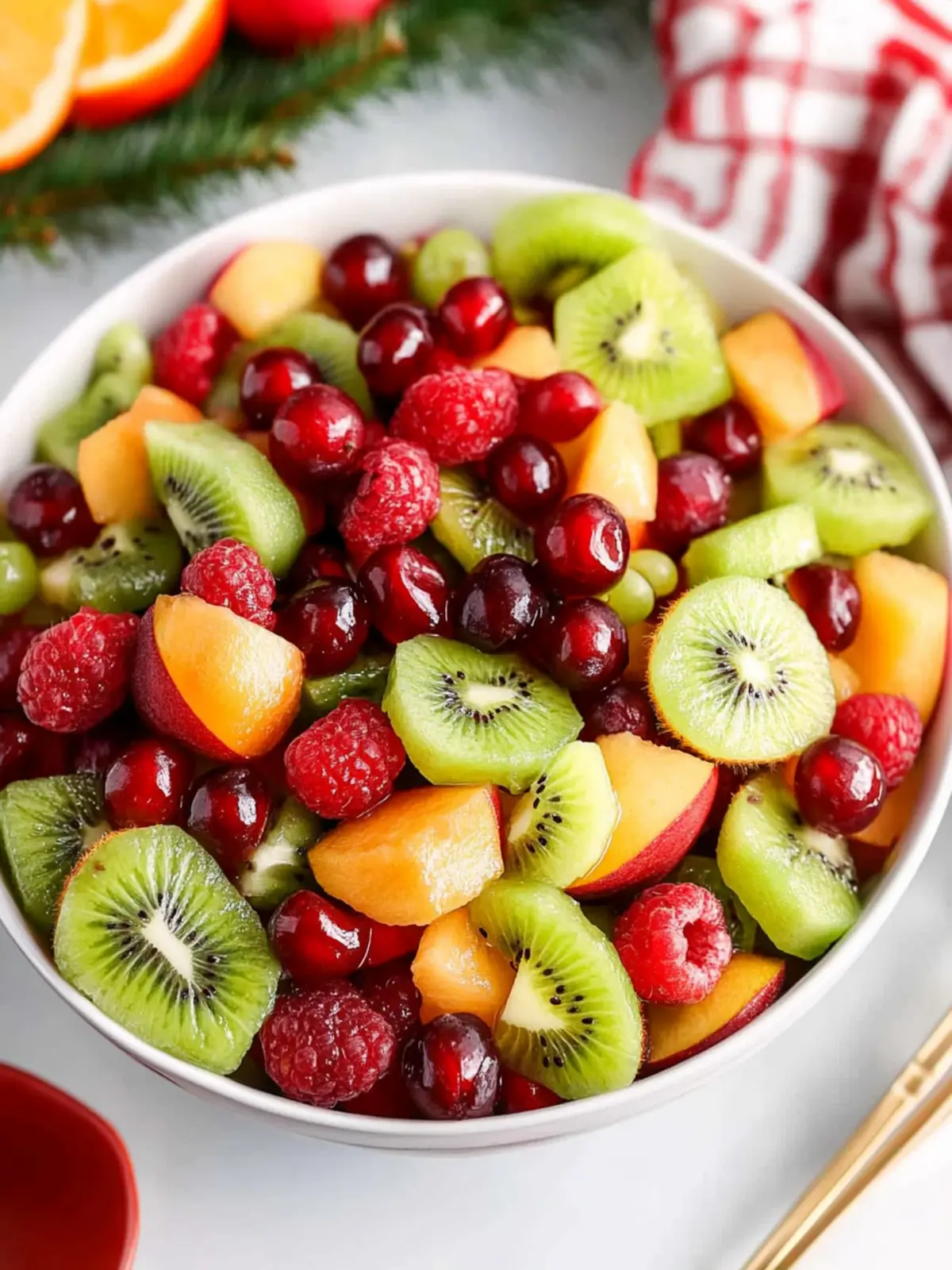
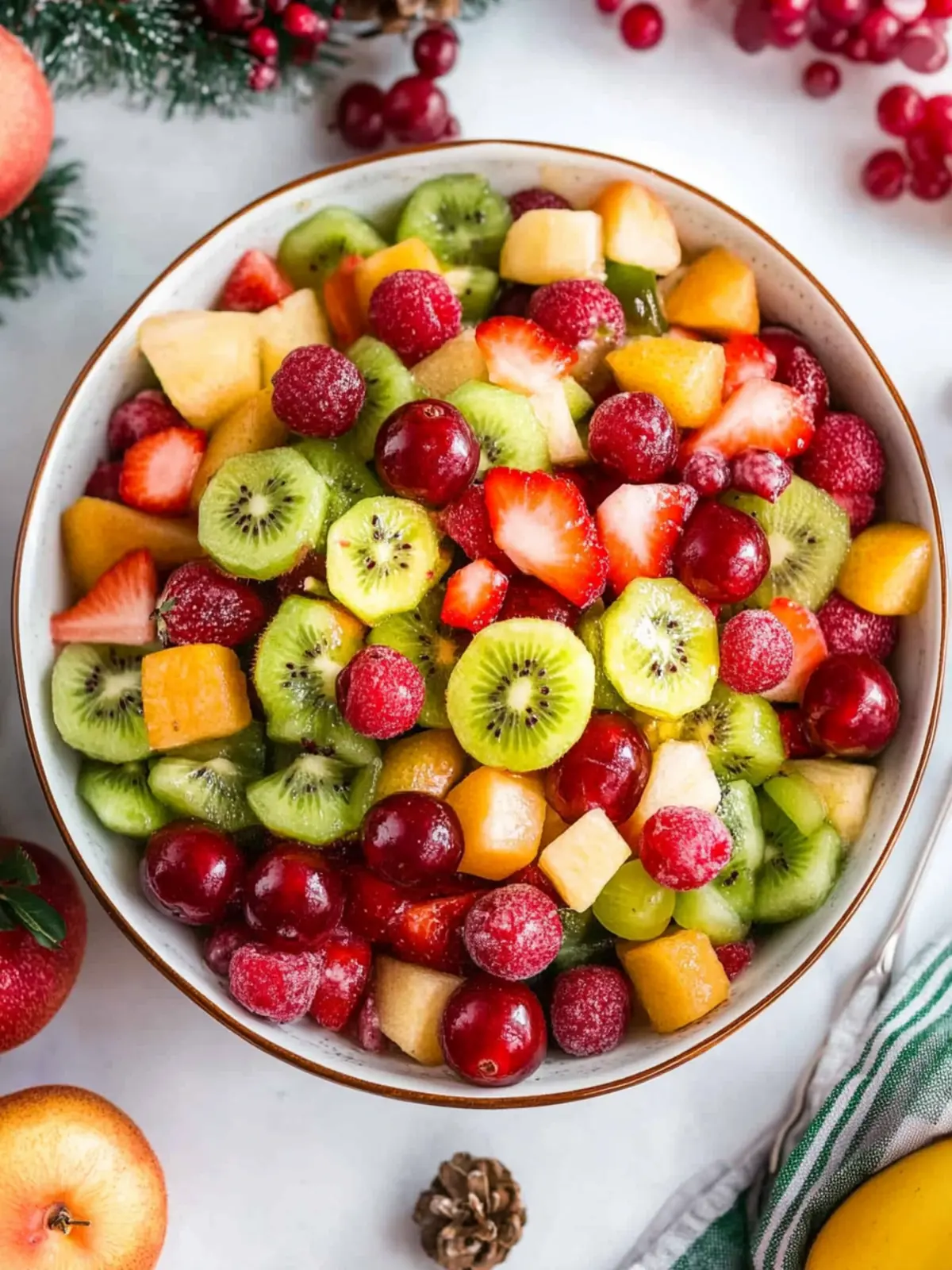
There’s a certain charm that comes with the festive season, and nothing captures that spirit quite like a vibrant Christmas Fruit Salad. As I was decorating my home for the holidays, the thought of serving something fresh and colorful alongside the traditional feast kept dancing in my mind. This delightful salad, bursting with the juicy sweetness of green and red grapes, kiwi, strawberries, and a sprinkle of pomegranate arils, creates a visually stunning centerpiece for any holiday gathering.
The best part? Its refreshing flavor profile is perfectly accentuated by a light lime honey dressing, making it a healthy counterpoint to all those indulgent sweets. This salad not only brightens your table but also livens up your palate, ensuring there’s a delightful balance amid the rich flavors of the season. Whether you’re hosting a holiday brunch or simply looking for a way to add a touch of cheer to your meals, this Christmas Fruit Salad is sure to impress. Let’s dive in and make this festive treat a highlight of your holiday celebrations!

Why will you love this Christmas Fruit Salad?
Bright colors: This salad’s vibrant hues will brighten up your holiday table.
Fresh flavors: Each bite is a burst of juicy sweetness that refreshes the palate.
Easy prep: Quick to make with minimal chopping, this dish is stress-free!
Perfect for gatherings: Its crowd-pleasing combination of fruits appeals to kids and adults alike.
Healthy choice: A guilt-free option that balances the holiday indulgences beautifully.
Versatile ingredients: Feel free to mix and match fruits or swap in your favorites for a personalized touch!
Christmas Fruit Salad Ingredients
For the Fruit
• Green Grapes – Sweet and refreshing; you can switch them out for red grapes for added flavor.
• Red Grapes – Provides a delightful sweetness; substitute with more kiwi or strawberries if desired.
• Kiwi – Adds a tropical note and beautiful color; feel free to replace with sliced banana for a different twist.
• Strawberries – Bursting with juicy sweetness; other berries like raspberries can also be used.
• Pomegranate Arils – Introduce a crunchy texture and a tart contrast; if unavailable, chopped oranges work well.
For the Dressing
• Honey – A natural sweetener for the dressing; agave syrup makes a fabulous vegan alternative.
• Lime Juice – Brightens and enhances the fruit flavors; lemon juice is an acceptable substitute.
With these ingredients in hand, your Christmas Fruit Salad will shine at any festive gathering!
How to Make Christmas Fruit Salad
-
Prep Fruits: Begin by washing the green and red grapes and strawberries thoroughly. Peel the kiwi, slice it, and halve the strawberries for that perfect bite-size shape!
-
Mix Ingredients: In a large mixing bowl, toss together the green grapes, red grapes, kiwi, strawberries, and the pomegranate arils. Look for that joyful medley of colors as you combine the fruits!
-
Make Dressing: In a smaller bowl, whisk together the honey and lime juice until it’s well combined and smooth. This dressing is what brings all those fruity flavors together beautifully!
-
Combine: Pour the zesty dressing over the fresh fruit mix and gently toss everything together. Aim for an even coating to ensure every piece of fruit is kissed with that delightful lime honey goodness!
-
Serve: Transfer the vibrant salad to a serving bowl or store it in an airtight container in the refrigerator until it’s time to enjoy. For the best freshness, try to serve it within 5-6 hours!
Optional: Garnish with a few extra pomegranate arils on top for an added festive touch.
Exact quantities are listed in the recipe card below.
Expert Tips for Christmas Fruit Salad
-
Freshness First: Prepare the salad on the same day you plan to serve it to ensure every bite is packed with freshness for that delightful Christmas Fruit Salad experience.
-
Chill to Enhance: Allow the salad to sit in the fridge for about 30 minutes before serving; this chilling time allows the flavors to meld beautifully.
-
Airtight Storage: If making ahead, store in an airtight container; this will help maintain freshness and quality for up to 1-2 days.
-
Color Matters: Choose a mix of fruits with varying colors and textures; this not only makes the dish visually appealing but also adds exciting flavors and nutrients.
-
Avoid Sogginess: If using especially juicy fruits, toss them in right before serving to prevent the salad from getting watery.
-
Dress Sparingly: Start with a small amount of the lime honey dressing; you can always add more if desired, ensuring every piece of fruit shines in the spotlight!
Make Ahead Options
Preparing your Christmas Fruit Salad in advance is a fantastic way to save time during the busy holiday season! You can wash and chop all the fruits—green grapes, red grapes, kiwi, strawberries, and pomegranate arils—up to 24 hours ahead. Store the prepped fruits in an airtight container in the refrigerator to maintain their freshness and prevent browning. However, it’s best to mix them with the lime honey dressing just before serving to keep them crisp and bright. When you’re ready to enjoy, simply toss the fruits with the dressing and serve for a delightful, stress-free addition to your holiday table!
What to Serve with Christmas Fruit Salad?
Elevate your holiday meal by pairing this vibrant salad with delightful sides and drinks that complement its freshness.
- Savory Cheese Platter: A selection of crisp cheeses like brie and gouda balances the sweetness of the fruit salad, making for a delightful contrast.
- Honey Glazed Ham: The salty-sweet flavors from this classic holiday dish harmonize beautifully with the fruit salad’s refreshing elements. Serve slices alongside for a festive touch.
- Spinach and Pomegranate Salad: This complementary salad brings its own refreshing crunch and tanginess, perfectly echoing the pomegranate arils in your fruit salad.
- Roasted Sweet Potatoes: Their natural sweetness and creamy texture can balance the fruit, creating a hearty contrast that’s perfect for winter gatherings.
- Cinnamon-spiced Mulled Wine: Serve this warm beverage to add a cozy aroma to the table; the spices will enhance the flavors in your Christmas Fruit Salad.
- Gingerbread Cookies: These festive treats provide a different texture and a warm, spiced flavor that pairs beautifully with the fruity notes of the salad.
- Yogurt Parfaits: Layered yogurt with granola and seasonal fruits create a creamy, pleasantly sweet dessert that mirrors the fruits in your salad.
- Sparkling Water with Lime: A refreshing drink option that elevates your meal without overshadowing the bright flavors of your salad.
- Vanilla Ice Cream: A scoop of this creamy delight serves as an indulgent contrast to the zesty, fruity elements, making for a delightful end to your holiday feast.
Christmas Fruit Salad Variations
Feel free to play and adapt this festive salad to suit your taste and dietary preferences!
-
Yogurt Dressing: Swap the honey dressing for a creamy yogurt-based dressing for a richer flavor.
-
Nutty Crunch: Add chopped nuts like almonds or walnuts for some delightful texture and added health benefits. Combine them right before serving to keep the crunch!
-
Seasonal Fruits: Incorporate seasonal fruits like citrus slices or apples for a unique twist that celebrates winter’s bounty.
-
Minty Freshness: Toss in some fresh mint leaves to add a refreshing flavor that complements the fruits beautifully.
-
Cinnamon Spice: Sprinkle a dash of cinnamon on top for a warm, cozy aroma that’s perfect for the holidays. Just a hint can transform the experience!
-
Dried Fruits: Add dried cranberries or apricots for a chewy texture and burst of sweetness to contrast with the fresh fruit.
-
Tropical Twist: Substitute the kiwi with mango or pineapple for a tropical flair you won’t want to miss.
-
Heat it Up: If you’re feeling adventurous, incorporate a pinch of cayenne or chili powder to give your salad a surprising kick.
How to Store and Freeze Christmas Fruit Salad
-
Fridge: Store your salad in an airtight container, and it’s best consumed within 1-2 days for optimal taste and freshness.
-
Room Temperature: Avoid leaving the salad out for extended periods. It should not sit at room temperature for more than 2 hours to maintain quality.
-
Freezer: Freezing is not recommended for this Christmas Fruit Salad due to the high water content of many fruits, which can become mushy upon thawing.
-
Reheating: As this dish is enjoyed cold, simply serve it straight from the fridge for best flavor and texture.
Christmas Fruit Salad Recipe FAQs
What kind of grapes should I use for the Christmas Fruit Salad?
You can use either green or red grapes, depending on your preference! Green grapes offer a sweet and refreshing taste, while red grapes provide a slightly richer flavor. For a fun twist, you can even mix the two varieties or substitute one for the other without losing any of that deliciousness!
How should I store the Christmas Fruit Salad?
To keep your salad fresh, store it in an airtight container in the refrigerator. It’s best consumed within 1-2 days to enjoy the vibrant flavors and crisp textures. Additionally, make sure to avoid leaving it out at room temperature for more than 2 hours to maintain its quality.
Can I freeze leftover Christmas Fruit Salad?
Freezing this Christmas Fruit Salad isn’t recommended. The high water content in the fruits can lead to a mushy texture when thawed. Instead, enjoy it fresh, or if you need to prepare in advance, just store it in the fridge, remembering to consume it within a couple of days.
How can I make sure my fruit is ripe and fresh?
Absolutely! Look for firm, plump grapes without dark spots. Choose kiwis that are slightly soft to the touch, indicating ripeness. Strawberries should be vibrant and fragrant, and pomegranate arils should be bright and bursting with color. If you find any fruits starting to lose their freshness, it’s best to skip or substitute them with fresher options for your salad.
Is this Christmas Fruit Salad suitable for those with allergies?
This recipe is generally allergy-friendly, but always check for common allergens. The main ingredients are fruits, honey, and lime juice. If there are any concerns, you can replace honey with agave syrup for a vegan option and feel free to swap out any fruit according to personal dietary needs or allergies.
Can I add other fruits or ingredients to the Christmas Fruit Salad?
Very much! This salad is versatile! You can add seasonal fruits like oranges or grapefruit slices for varying flavors or toss in some nuts for added crunch and health benefits. It’s all about personalizing the salad to suit your taste and what you have on hand!
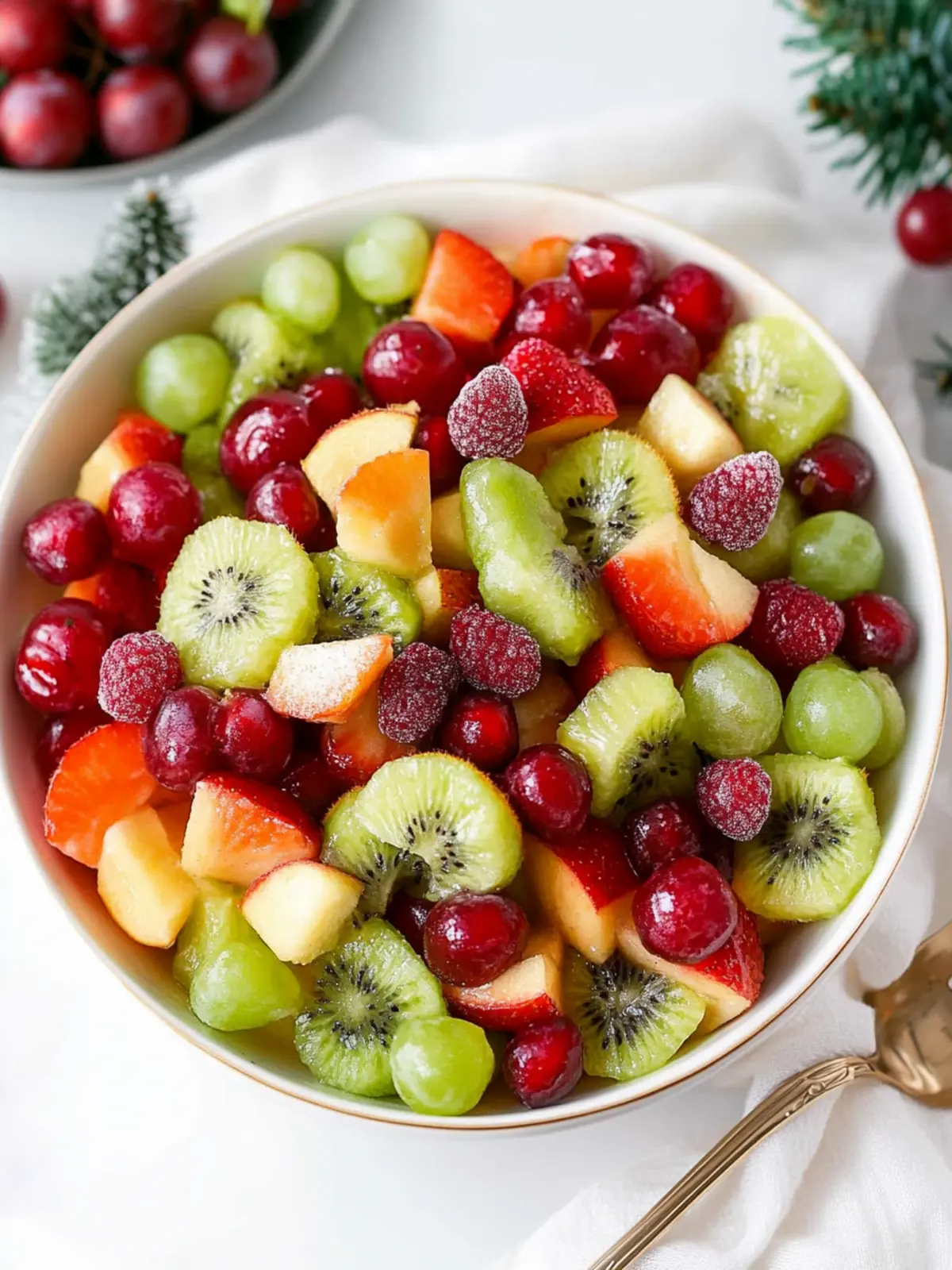
Delightful Christmas Fruit Salad with Zesty Lime Honey Dressing
Ingredients
Equipment
Method
- Prep Fruits: Wash green and red grapes and strawberries thoroughly. Peel and slice the kiwi, and halve the strawberries.
- Mix Ingredients: In a large mixing bowl, toss together the grapes, kiwi, strawberries, and pomegranate arils.
- Make Dressing: Whisk together honey and lime juice in a smaller bowl until well combined.
- Combine: Pour the dressing over the fruit mix and gently toss to coat evenly.
- Serve: Transfer to a serving bowl or store in the refrigerator until ready to enjoy.